July Artist Edition
Featured Index & Highlights
New Delhi: For many artists, a sculpture is meant to be admired. For Madhurendra Kumar, it is also meant to make people stop, think and ask questions.
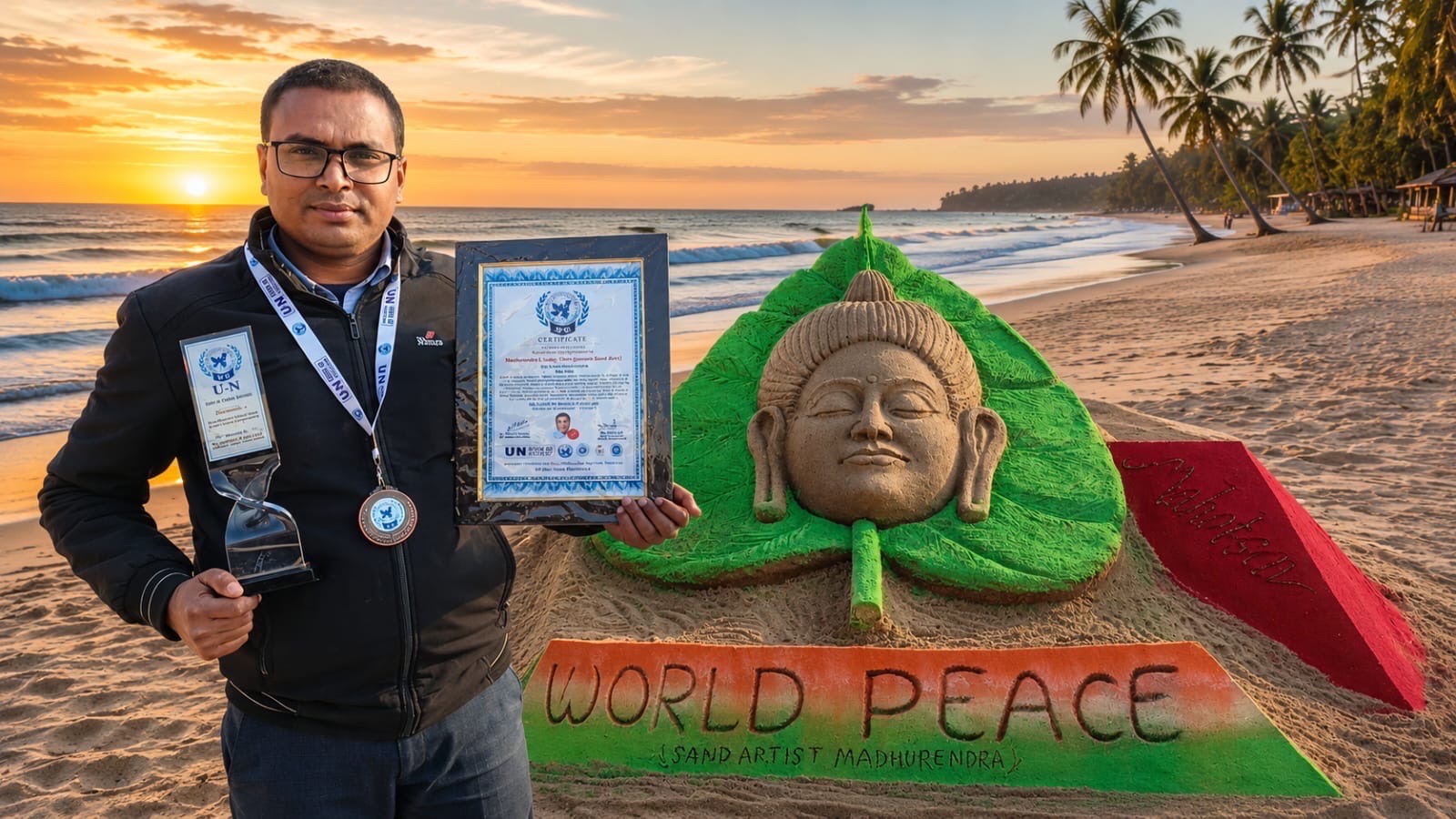
Over the past two decades, the Bihar-based sand artist has built a reputation for creating large-scale sculptures that go beyond artistic expression. His work has repeatedly focused on issues such as climate change, plastic pollution, water conservation, public health, women's empowerment and world peace, turning riverbanks and public spaces into open-air galleries for social awareness.
Today, Madhurendra Kumar is recognised internationally for both his artistic achievements and the messages carried through his sculptures.
Art That Begins with a Question

Unlike conventional exhibitions, Madhurendra Kumar's work often appears in places where people least expect to find art. A riverbank, a public square or the venue of a cultural festival becomes his studio.
Each sculpture is planned around a theme.
Some are inspired by environmental concerns. Others focus on historical figures, cultural heritage or current social challenges. The intention, according to Kumar, is to encourage people to engage with issues that affect everyday life.
His sculptures frequently become gathering points where visitors pause to take photographs, discuss the subject and share the artwork across social media, allowing the message to travel far beyond the exhibition site.
Sand as a Medium for Public Awareness
Working with sand presents challenges that few artistic mediums demand.
Every sculpture is temporary. Wind, rain or changing weather can erase days of work within hours.
Yet Kumar believes this temporary nature gives sand art a unique strength. People know the sculpture will not remain forever, encouraging them to experience it while they can.
Over the years, he has created installations promoting campaigns against plastic pollution, drug abuse, climate change, terrorism and environmental degradation. His work has also highlighted water conservation, sanitation, voter awareness and the importance of preserving India's cultural heritage.
Beyond Sand Sculpture
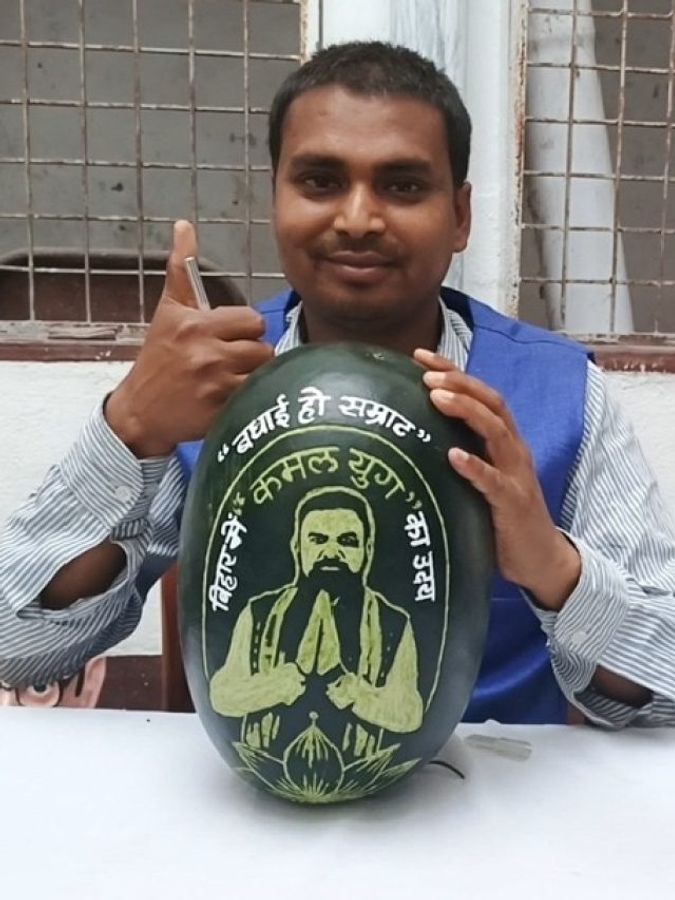
Although widely known for sand art, Madhurendra Kumar has explored several other forms of visual expression.
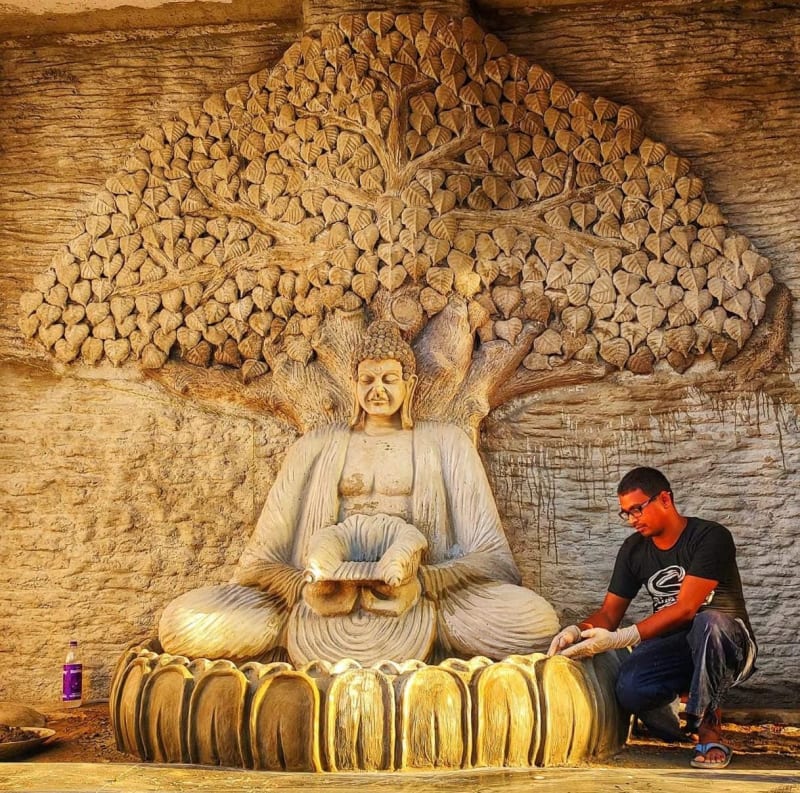
Leaves, grains, fruits, cement, thermocol and recycled waste materials have all appeared in his work. His leaf art collection alone includes thousands of individual creations, while several installations built from discarded bottles and tobacco sachets have carried messages about addiction and environmental responsibility.
These experiments have expanded his work beyond traditional sculpture while reinforcing his interest in using everyday materials to communicate larger ideas.
Taking Indian Sand Art Across Borders
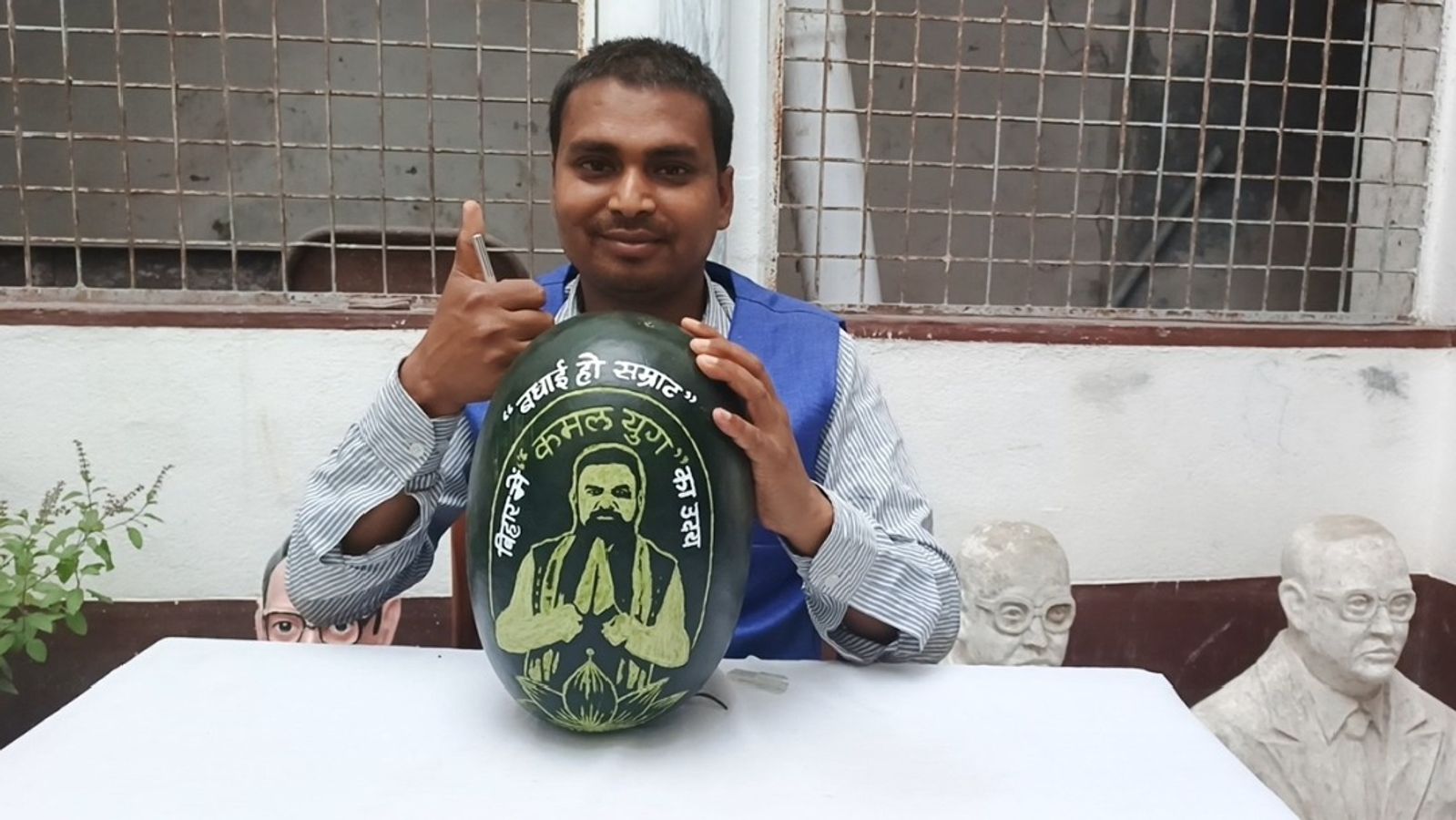
Madhurendra Kumar has represented India at international sand art festivals and cultural events in more than 25 countries.
His sculptures have been displayed before audiences in the United States, the United Kingdom, Germany, France, Japan, China, Australia, Italy, Russia, Bhutan and Sri Lanka, among other countries.
Many of these works combine Indian cultural themes with subjects that resonate globally, allowing international audiences to engage with both Indian traditions and contemporary concerns.
Recognition from International Institutions
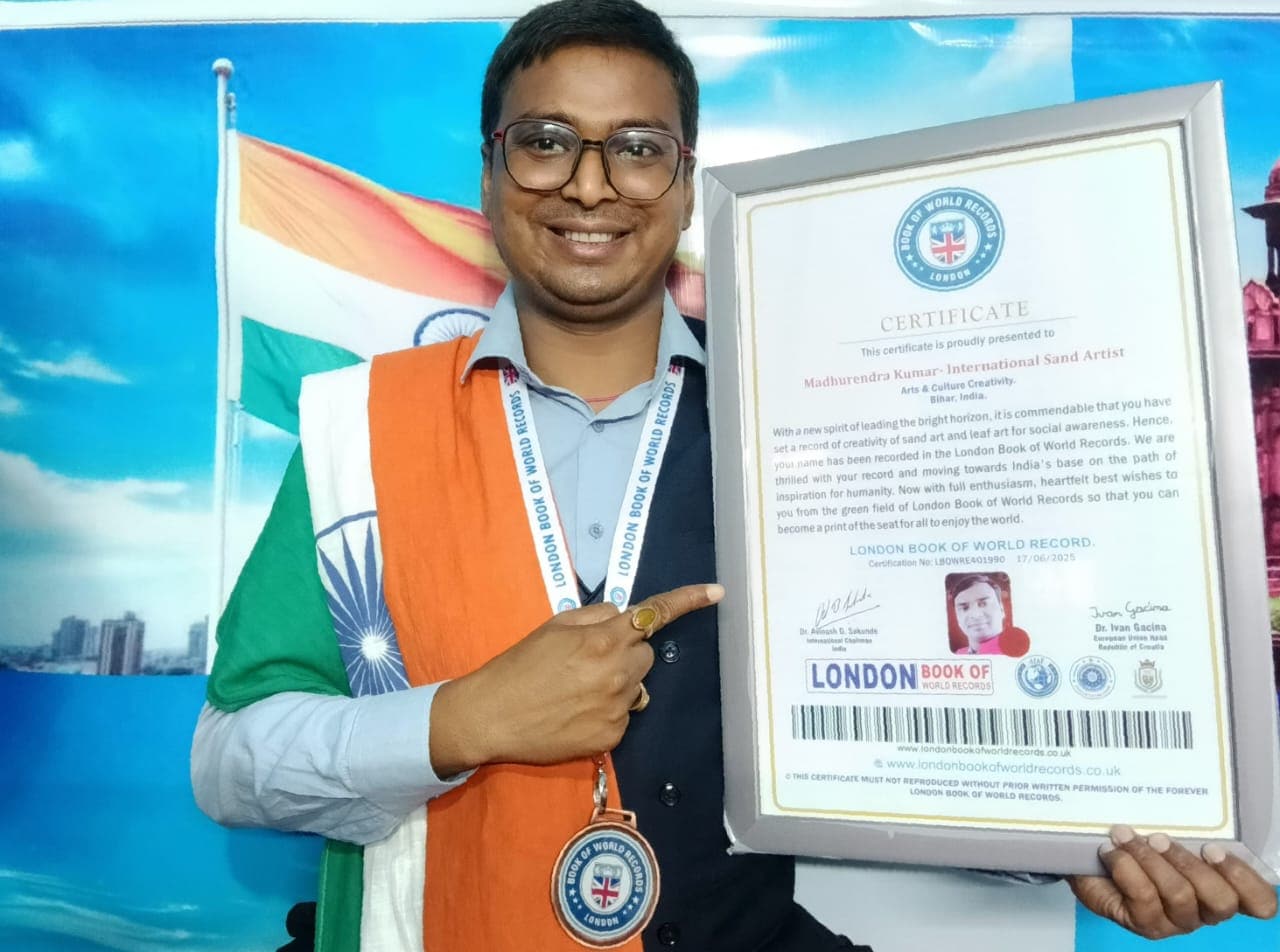
The artist's work has received recognition from several international record organisations.
His achievements include acknowledgements from the London Book of World Records, Asian Book of World Records, U-N Book of World Records, USA Book of World Records and Forbes Book of World Records for projects involving sand sculpture, leaf art and public awareness campaigns.
In 2026, America International University (AIU), Hollywood, California, awarded Madhurendra Kumar an Honorary Doctor of Philosophy in Sand Art, recognising his contribution to contemporary art and his efforts to promote environmental conservation, cultural preservation and humanitarian causes through sculpture.
More Than an Individual Achievement
For Kumar, international recognition carries a meaning beyond personal success.
Coming from a rural farming family in Bihar, he says his achievements demonstrate that artistic talent can emerge from places where opportunities are often limited. He has frequently spoken about establishing a free sand art academy for children from economically weaker backgrounds so that financial hardship does not prevent young artists from developing their skills.
The idea is closely linked to his own childhood, when continuing his education often depended on taking up small jobs to support himself.
Looking Ahead
As public art continues to evolve, Madhurendra Kumar believes artists have an important role in conversations that extend beyond galleries and museums.
His sculptures may be temporary, but the issues they address remain relevant long after the artwork has disappeared. Whether created from sand, leaves or recycled materials, each installation reflects his belief that art can do more than decorate a space. It can encourage discussion, preserve cultural memory and draw attention to concerns that affect communities around the world.
With projects displayed across India and abroad, Madhurendra Kumar continues to demonstrate how a traditional art form can remain relevant by responding to contemporary issues while carrying a distinctly Indian identity.