White Cliffs Solar Power Station Added to Australia Heritage Register After 45 Years
Australia’s first solar power station at remote White Cliffs in New South Wales has been formally recognised as a state heritage site 45 years after it began operating. The 1981 project used 14 parabolic dishes to supply electricity to a hospital, school, post office and 12 homes.
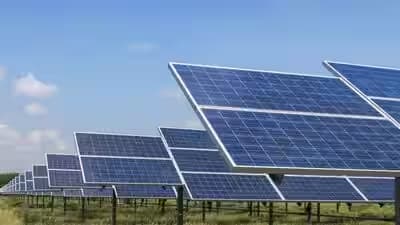
Australia’s pioneering White Cliffs solar power station has been formally recognised as part of the state’s heritage after more than four decades, preserving the remains of a project that demonstrated how solar energy could serve communities far from the electricity grid.
Located in the remote outback of western New South Wales, the station began operating in 1981 with 14 parabolic solar dishes. The system supplied electricity to essential services in White Cliffs, including its hospital, school and post office, as well as 12 residential homes.
At a time when solar power was still a relatively experimental technology, the project provided a practical test of renewable energy in one of Australia's most isolated environments.
Why White Cliffs needed an alternative to diesel
White Cliffs was situated well beyond the reach of Australia's main electricity network. Supplying the community with diesel generators required fuel to be transported over long distances, adding significant logistical and operating costs.
The area's strong sunlight offered another possibility. Engineers developed the solar station as a demonstration project to determine whether concentrated solar energy could provide dependable electricity for a remote community.
The location's high solar exposure made it suitable for testing the technology under demanding outback conditions.
How the 1981 solar station worked
The White Cliffs facility consisted of 14 parabolic dishes mounted on tracking systems that followed the sun throughout the day.
The dishes concentrated sunlight onto receivers, heating a working fluid that was used to drive a generator. Electricity was then supplied to the community's local mini-grid.
Battery storage helped provide electricity when sunlight was unavailable, while diesel generators remained available as backup during prolonged cloudy conditions and periods of maintenance.

Dany is a business journalist with Annuity Outlook Magazine, with over 16 years of experience across print, digital, and wires. He covers business, technology, policy, and corporate developments, with a focus on in-depth reporting and analysis. Over the years, he has worked across multiple editorial platforms. Skilled in content creation, editing, proofreading, and overseeing print layouts, his career spans multiple editorial platforms.